
Daily Supplement Stack
Building a Vitamin D and Magnesium Stack for Active Men
Marcus Chen
·
·
9 min read

When active men describe what they notice about their daily energy patterns, two categories of observation recur with notable frequency: a sense of sustained focus across the working day, and the capacity to maintain consistent output across multiple training sessions without an obvious accumulation of fatigue. The nutritional research associated with zinc and the B vitamin group touches on both of these areas. This editorial survey examines what that research notes, and how it maps onto the supplement stacking habits that have become part of men's daily wellness routines.
Zinc is a mineral that participates in a broad range of the body's physiological processes. Its presence in men's supplement discussions has grown as interest in nutritional balance for active lifestyles has increased. The nutritional role most commonly attributed to zinc in published research is its contribution to overall nutritional balance — a description that may seem general, but which reflects the genuinely wide scope of zinc's involvement in basic biological functioning.
For active men, the research of particular interest concerns zinc's involvement in the processes associated with physical recovery and immune function awareness. Several independent studies have observed that physically active adults — particularly those who engage in endurance or resistance training over extended periods — tend to have lower circulating zinc concentrations than sedentary individuals. The explanation most commonly offered is that physical activity affects how the body handles and excretes zinc.
Within the supplement habit surveys reviewed by this editorial team, zinc appears most often as part of a broader stack alongside other minerals and the B vitamin group. It is rarely the focal supplement — men who include it typically describe it as a background element of their routine rather than the centrepiece. This observation is itself informative: zinc's contribution is noted in retrospect, when it is absent from the routine, rather than as an immediate or obvious daily effect.
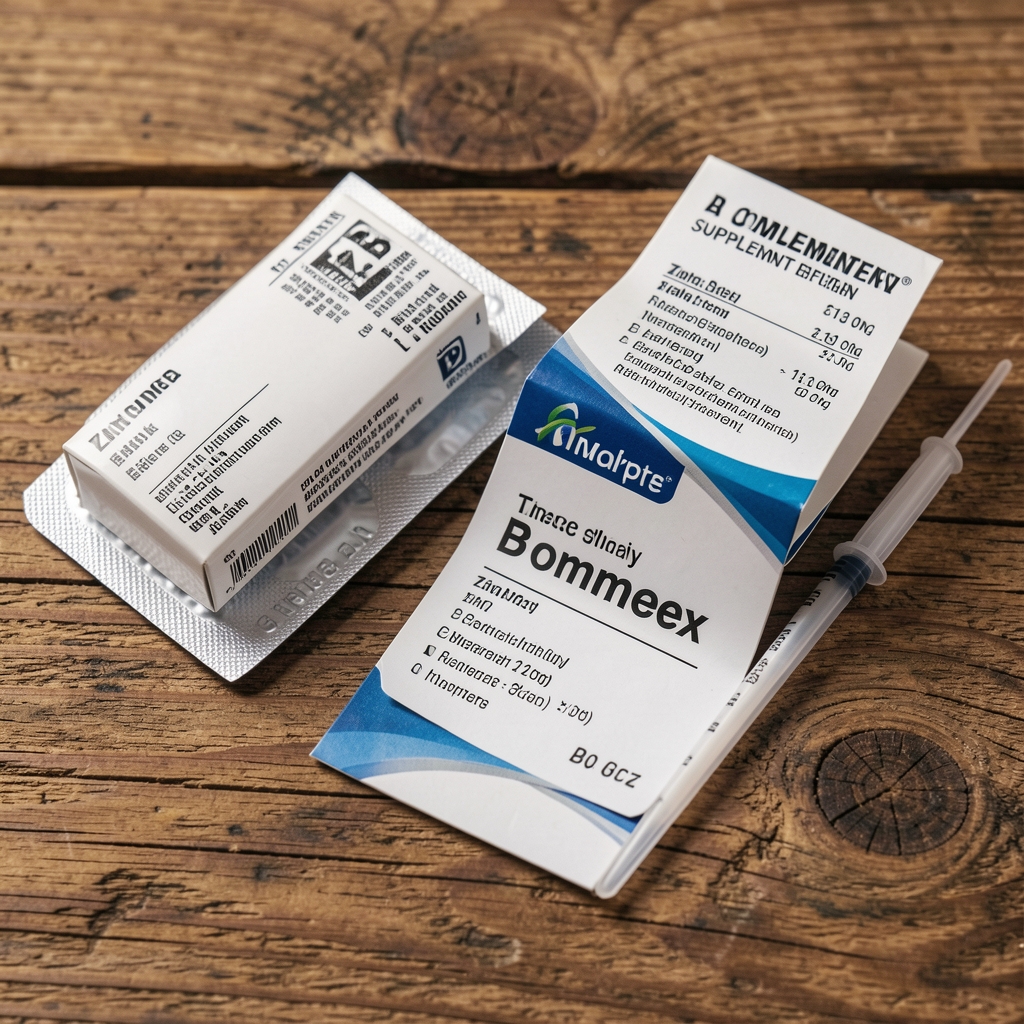
Supplement label detail — editorial, Jakarta, 2026
The B vitamins are not a single nutrient but a family of eight distinct compounds, each with its own functional roles. In men's supplement discussions, the group is often treated as a unit — B-complex supplements are among the most commonly purchased products in the active lifestyle supplement category — but the individual members of the group differ considerably in their reported areas of contribution.
B12, B6, and B2 (riboflavin) appear most frequently in the research associated with daily energy awareness. B12, in particular, has attracted attention as a nutrient whose absence is associated with a notable reduction in the sense of daily focus and sustained energy — though the research carefully notes that this association is strongest in individuals whose baseline intake is already low, rather than representing a linear effect at all intake levels.
B6 appears in research on mood and cognitive function awareness, as well as in the context of protein and amino acid processing — making it a nutrient of particular relevance to men whose supplement stacks already include protein additions. The interaction between B6 and protein intake is noted in several nutritional analyses as an area of practical relevance for men with high daily protein targets.
Folate (B9) and B1 (thiamine) round out the group's contribution to energy and focus awareness. The consistent editorial note across the research surveyed for this piece is that the B vitamins, taken together, contribute to a broad pattern of daily nutritional support rather than a targeted effect on any single measurable outcome.
"B vitamins are the infrastructure of the supplement stack — not visible as individual contributors, but conspicuous when the infrastructure is absent."
In the habit surveys reviewed for this editorial, zinc and B vitamins — usually in the form of a B-complex — are among the most frequently co-occurring supplements in men's daily stacks. The combination tends to be described by practitioners in functional terms: it represents the nutritional baseline on top of which more targeted additions (vitamin D, magnesium, protein, creatine) are layered.
This baseline characterisation is consistent with what the research suggests about both nutrient groups. Neither zinc nor the B vitamins tends to produce the kind of immediate, noticeable effect that drives dramatic supplement adoption. Their contribution is, instead, to the ongoing maintenance of the conditions under which daily physical and cognitive activity can proceed smoothly.
In practical terms, men who include these nutrients in their routines tend to describe their absence — after a period without them — in terms of what is missing rather than in terms of any positive effect they produced. This is the characteristic footprint of nutritional support: it is most evident when it is not there.
Both zinc and the B vitamins are available from a wide range of dietary sources. Zinc appears in red meat, shellfish, legumes, seeds, and whole grains. The B vitamins are distributed across animal products (B12 is almost exclusively from animal sources), leafy greens, legumes, eggs, and fortified foods. For men whose diets are varied and include adequate representation of these food groups, the contribution of supplemental zinc and B vitamins may be more modest.
For men who train intensively, follow restricted dietary patterns, or whose food environments limit dietary variety, the supplemental contribution is more significant. The research on physically active adults consistently notes that the demands of a regular training routine affect the body's handling of multiple micronutrients — zinc among them — in ways that are not always compensated by diet alone.
The editorial position here is consistent with the journal's broader approach: supplemental zinc and B vitamins represent a reasonable and evidence-informed addition to the routines of men who train regularly, understand the nature of nutritional support, and have ruled out significant dietary gaps through consultation with a qualified wellness professional.
What this editorial survey observes, across multiple independent sources, is a consistent pattern in how men approach the construction of their supplement routines. The pattern moves from foundation to specificity: a baseline of nutritional support (B vitamins, zinc, vitamin D, magnesium) is established first, and targeted additions are layered onto that baseline according to individual training goals and dietary patterns.
This pattern reflects an evidence-informed approach to supplementation that prioritises consistency over intensity, and long-term nutritional awareness over short-term effect-seeking. It is the kind of approach that the journal's editorial perspective finds most consistent with the published research: gradual, considered, and grounded in the practical realities of daily life.
Articles published on Atoriv Journal are editorial in nature and reflect the writers' observations on everyday supplementation habits and nutritional awareness for active men. The content is not intended as professional advice, nor as guidance for the management of any specific condition. Readers with specific concerns about their daily routines are encouraged to speak with a qualified wellness professional.

Reza Pratama is a contributing writer and nutritional research analyst who writes for Atoriv Journal on the practical patterns of supplement use among active men in Southeast Asia.
Read more articles →